Your Vendor's BSP Is Probably Not Built For Product Longevity - Now What?
- Anna-Lena Marx
- Embedded , Conferences
- December 4, 2025
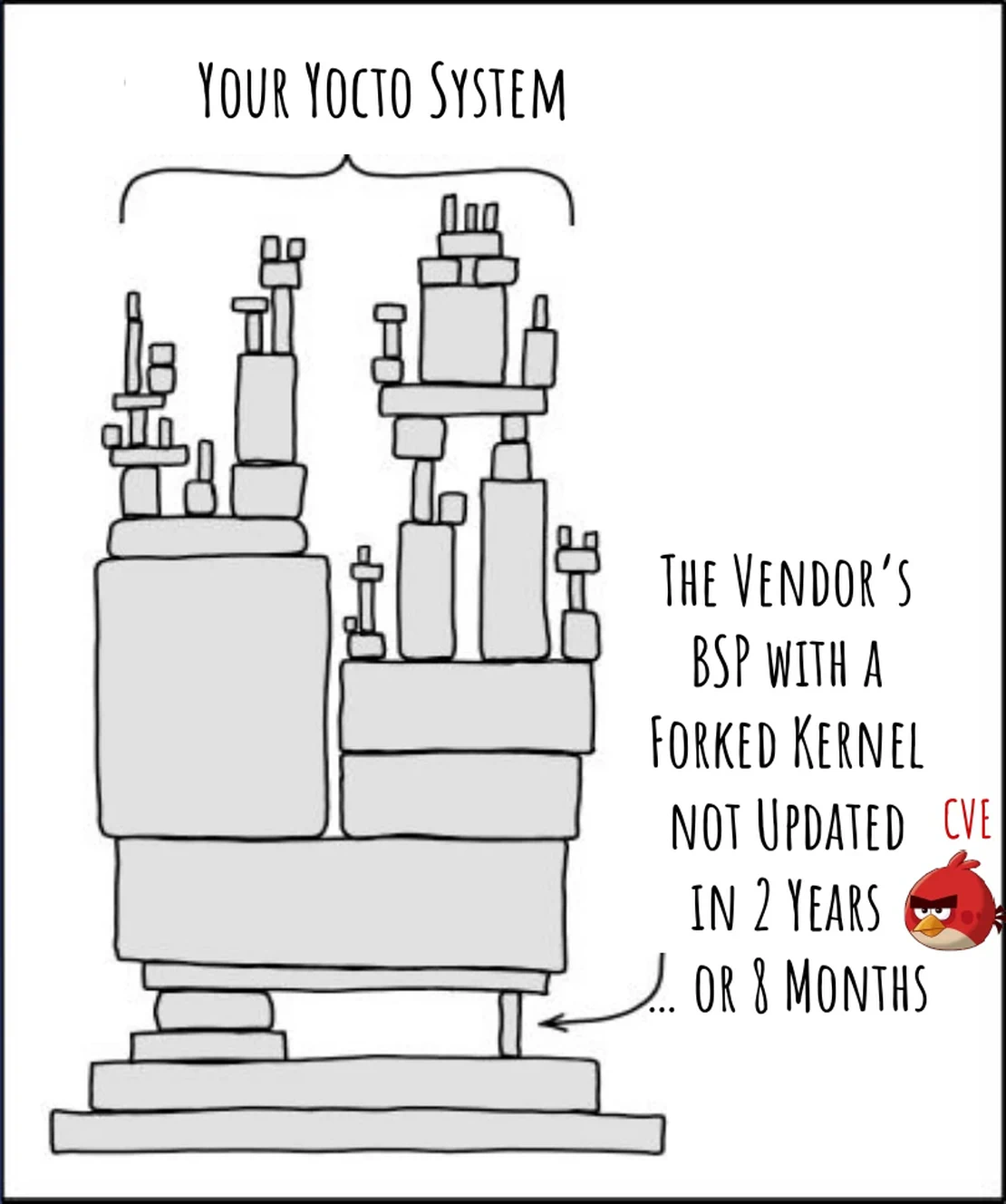
Vendor Board Support Packages (BSPs) are the standard for bringing new silicon to market, showcasing features, and promising an “easy” start. However, for those of us building products with long-term lifecycles, these BSPs often fail to meet quality requirements. They can be overly intrusive and typically don’t separate feature showcases from the well-maintained base needed for product development. This focus on rapid demonstration frequently results in BSPs which are difficult to maintain, lack transparency, and are built on non-LTS Yocto and kernel versions, making them unsuitable for products expected to last 5, 10, or even 20 years.
This talk will take a critical look at the state of vendor BSPs from an integrator’s perspective. We will explore the common pitfalls: opaque custom tooling, automatic inclusion of demo software, reliance on unmaintained kernel forks, and the widespread avoidance of Yocto LTS releases. We’ll discuss the differing perspectives of vendors and product developers, examine both good and bad real-world examples, and make the case for why writing your own sleek BSP layer is an absolutely valid strategy. Writing your own board descriptions and leveraging the stability of mainline Yocto and Linux kernels is not as daunting as it seems and can be the key to building truly sustainable and maintainable products.
Presented at
- Yocto Project Summit 2025.12, online
Related Posts
A Gentle Power Off for ZEReader: Replacing the Hard Switch with a Latching Power Circuit
- Anna-Lena Marx
- November 16, 2025
- Zereader , Electronics , Embedded
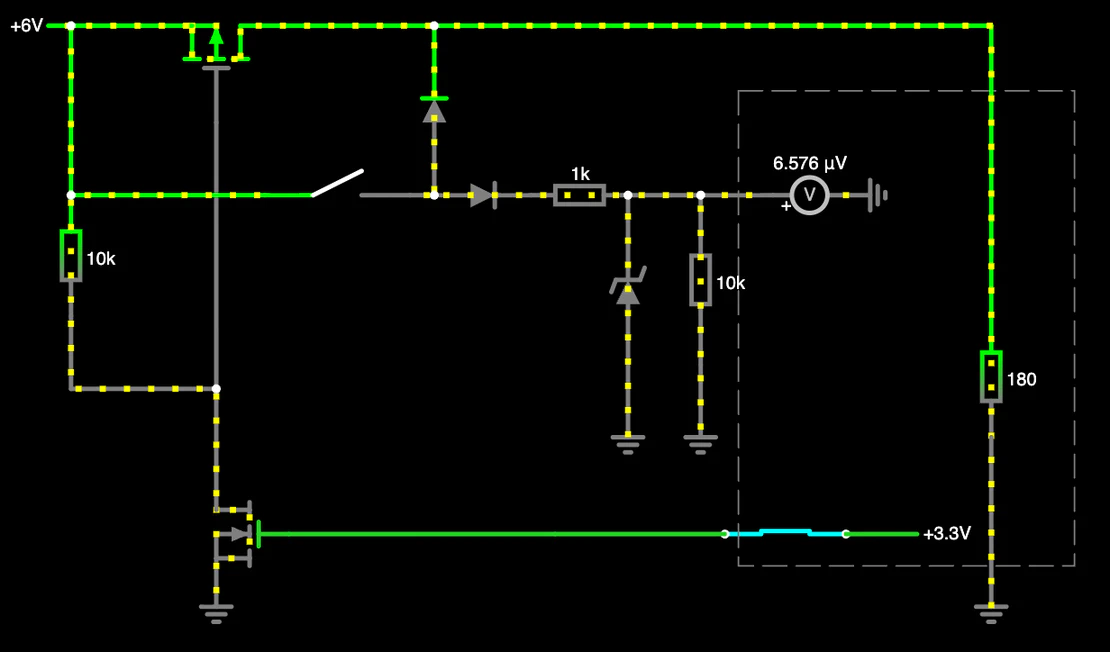
With the second revision, the way ZEReader is turned on and off got a massive redesign.
The hard on/off switch in the first revision was dead simple and worked great—with one big flaw from a user’s perspective. You could not recognize if the reader was on or off on the first sight. The old switch just closed or opened the loop with the power supply, and due to the E-Paper display just holding the state, you had no chance to tell.
Besides, there was no possibility at all to implement some kind of graceful shutdown mechanism, which would allow me to save all important state information and show a clear device off indicator.
This situation was totally fine for the very first prototype, but it started to get annoying very soon. A new approach was needed!
Advanced System Profiling, Tracing and Trace Analysis with Perfetto in Android and Yocto
- Anna-Lena Marx
- October 8, 2024
- Embedded , Conferences
Together with my colleague Stefan Lengfeld.
Tracing is a capable mechanism for deep system analysis and profiling with a minimal overhead. By recording defined system events, in Linux but also Android, tracing can be used to analyze concurrency or latency issues, for example. Android’s systrace tool made it easy to analyze and correlate traces and events due to a graphical UI, in order to help developers identify performance bottlenecks. The successor to this advanced and convenient tool is called Perfetto. It’s available for pure Linux too, and part of Yocto (meta-oe) since Langdale now. In the talk, we’ll have a look into
Read Post
How a modern Yocto setup could look like
- Anna-Lena Marx
- November 20, 2022
- Embedded , Conferences
In 2015, we built a sophisticated meeting room information system based on Android Things as a student project. As Android Things was deprecated in 2021, we started to use our Yocto Project experience to develop a maintainable, future proof embedded system.
When setting up a new project from scratch, we focused on proper solutions for
- a maintainable, well supported and patchable build environment for the embedded systems
- version control, reproducible builds and continuous integration
- license management
- a secure and stable update mechanism on image base and
- managing releases The talk aims to show how we build a system that matches our requirements using the Yocto Project, KAS, Gitlab CI, and Mender.io. Besides, we will have a short outlook to the application built in Flutter.
Presented at
- Yocto Project Summit 2022.11, virtual, 2022
- buildingIoT, Munich, 2023
Download original slides (Yocto Project Summit) Download updated slides (buildingIoT)
Read Post