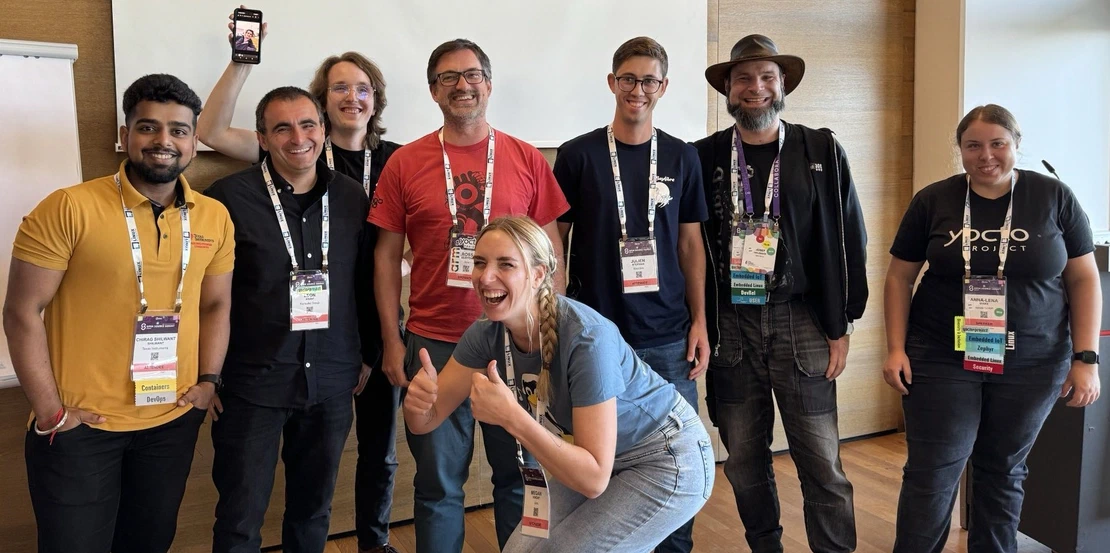
Yocto on the Edge - Unusual challenges when building not so embedded systems
- Anna-Lena Marx
- Embedded , Conferences
- October 8, 2024
Building embedded systems with Yocto on ARM platforms is a common practice, but when the products move further to the edge and become less “embedded,” new challenges arise. In this session, we will explore the requirements and challenges faced when developing Yocto-based systems for edge computing based on Intel.
We will dive into topics such as provisioning x86-based platforms, securely managing Linux user logins on a read-only root file system with enforced password changes, and implementing A/B updates together with secure boot. Real-world project requirements will be used as a guide to discuss practical solutions and best practices for addressing these challenges.
Attendees will gain a deeper understanding of how to navigate the complexities of Yocto development for “not so embedded” systems and leave with actionable insights to apply to their own projects.
Presented at
- Yocto Project Developer Day at OSS/ELC-E, Vienna, Austria, 2024
Related Posts
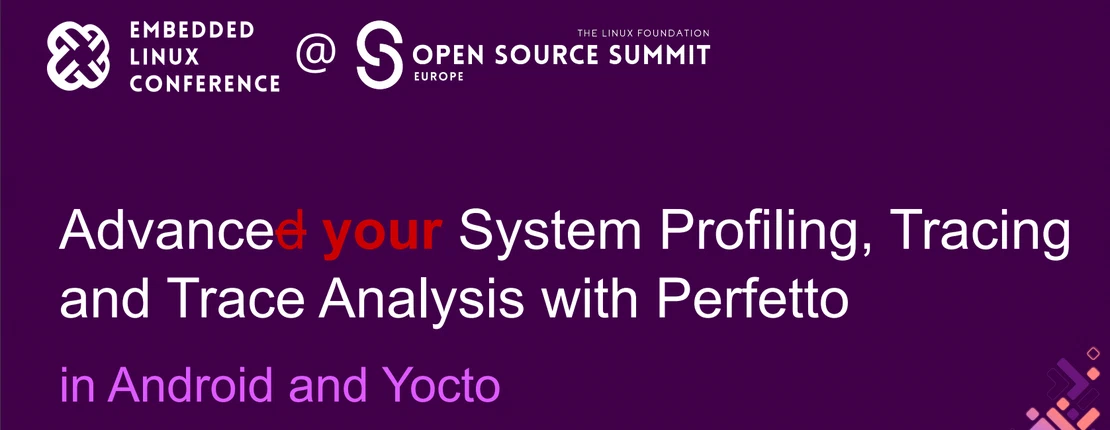
Advanced System Profiling, Tracing and Trace Analysis with Perfetto in Android and Yocto
- Anna-Lena Marx
- October 8, 2024
- Embedded , Conferences
Together with my colleague Stefan Lengfeld.
Tracing is a capable mechanism for deep system analysis and profiling with a minimal overhead. By recording defined system events, in Linux but also Android, tracing can be used to analyze concurrency or latency issues, for example. Android’s systrace tool made it easy to analyze and correlate traces and events due to a graphical UI, in order to help developers identify performance bottlenecks. The successor to this advanced and convenient tool is called Perfetto. It’s available for pure Linux too, and part of Yocto (meta-oe) since Langdale now. In the talk, we’ll have a look into
Read Post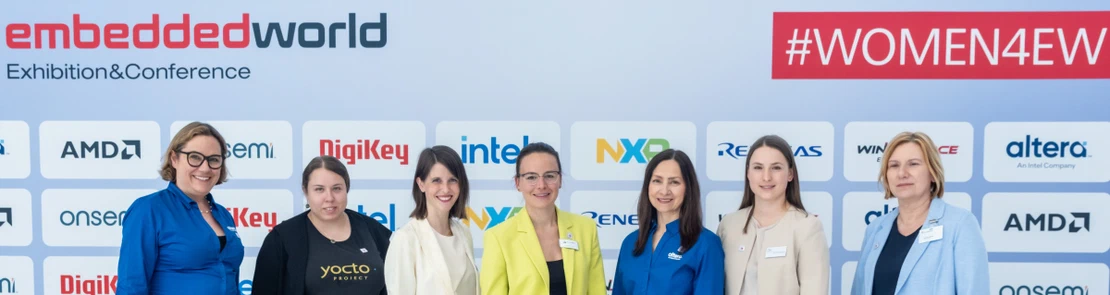
Embedded World 2024
- Anna-Lena Marx
- April 24, 2024
- Embedded
While I’m a regular visitor of the Embedded World Exhibition, this year was different. I had not only a more business-focused visit with lots of meetings with old and new partners and customers, but I also had the chance to serve rather spontaneously as a speaker, or better “Table Captain,” at the second edition of Embedded World’s women networking event #women4ew. Thus, I want to recap both parts separately and make a reference to what changed in contrast to my experiences outlined in the recently published post on International Women’s Day.
Read Post
Patching Unpatchable Files
- Anna-Lena Marx
- December 5, 2024
- Embedded , Conferences
In the Yocto world, the .bbappend file is a well-known and documented mechanism for altering recipe files, and an essential part of daily operations. While not common, there are instances where it becomes necessary to modify other file types, such as .inc or .bbclass, which do not offer an equivalent append mechanism. This session will summarize various strategies for effectively handling these file types when patching cannot be avoided.
In my recent presentation at the Yocto Developer Day in Vienna, I mentioned using the KAS patch mechanism for minor modifications to files like .inc or .bbclass, where the Yocto internal overwriting mechanism via .bbappend files does not apply. Initially intended as a helpful side note on how I navigated a few unique situations, this part quickly escalated into the most discussed segment of the talk. Half of the attendees I spoke with found it valuable, while the other half expressed strong objections.
Read Post