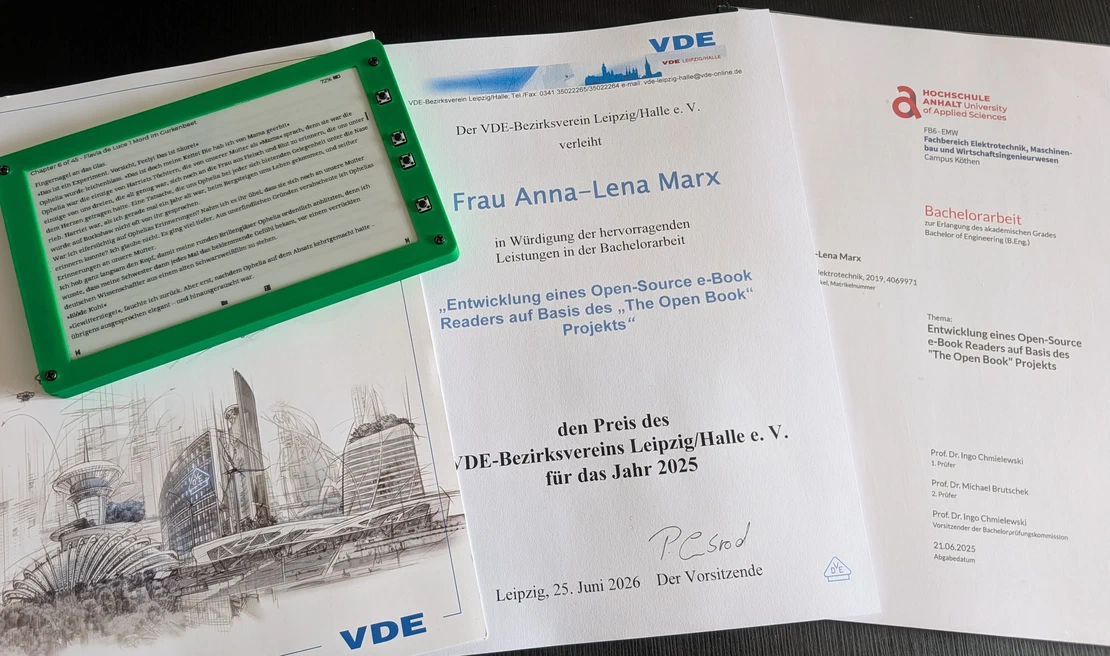
'VDE Best Thesis Award' for ZEReader Thesis
- Anna-Lena Marx
- ZEReader , Electronics
- July 30, 2026
Almost exactly one year after submitting my bachelor’s thesis in electrical engineering – which resulted in the ZEReader Project – I had the chance to meet one of my supervisors again and showcase how much the project has evolved since its initial version.
In mid-June, I received an email that my thesis would be awarded the ‘VDE Award’ for outstanding theses of the regional VDE association Leipzig/Halle, which my university belongs to. It was not completely unexpected, as my supervisors had told me after the final thesis defense that they would nominate my work. Still, living in Karlsruhe meant that attending a Thursday award ceremony in Leipzig on such short notice was quite a logistical challenge.
Together with my partner and even my parents, I was able to attend the event at the Elektrotechnische Sammlung Markkleeberg, present my thesis alongside the latest updates, and let people try it out for themselves. Beyond the honor of receiving the award, it was great to see my supervisor again and discuss which of the ideas from a year ago had become reality. Maybe I will also manage to finish writing the blog post about the second revision eventually.
The Elektrotechnische Sammlung (electrical engineering collection) itself is also worth a visit and probably rather unknown outside, and even within, Leipzig. Located in the rooms of an old transmission station, it features various exhibits from the history of electrical engineering collected by the VDE Leipzig/Halle. The volunteers in charge eagerly showed us around. And my father finally got to see a live mercury-arc valve in action, instead of just a video I took during my studies.
If you’re ever in Leipzig, check if the Elektrotechnische Sammlung is open to the public and pay it a visit!
Related Posts
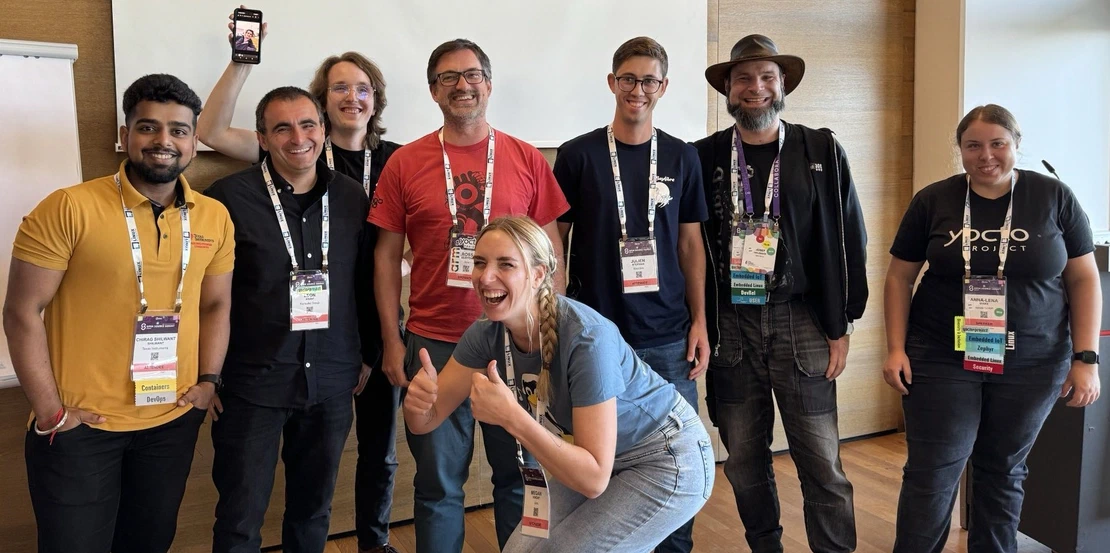
Yocto on the Edge - Unusual challenges when building not so embedded systems
- Anna-Lena Marx
- October 8, 2024
- Embedded , Conferences
Building embedded systems with Yocto on ARM platforms is a common practice, but when the products move further to the edge and become less “embedded,” new challenges arise. In this session, we will explore the requirements and challenges faced when developing Yocto-based systems for edge computing based on Intel.
We will dive into topics such as provisioning x86-based platforms, securely managing Linux user logins on a read-only root file system with enforced password changes, and implementing A/B updates together with secure boot. Real-world project requirements will be used as a guide to discuss practical solutions and best practices for addressing these challenges.
Read Post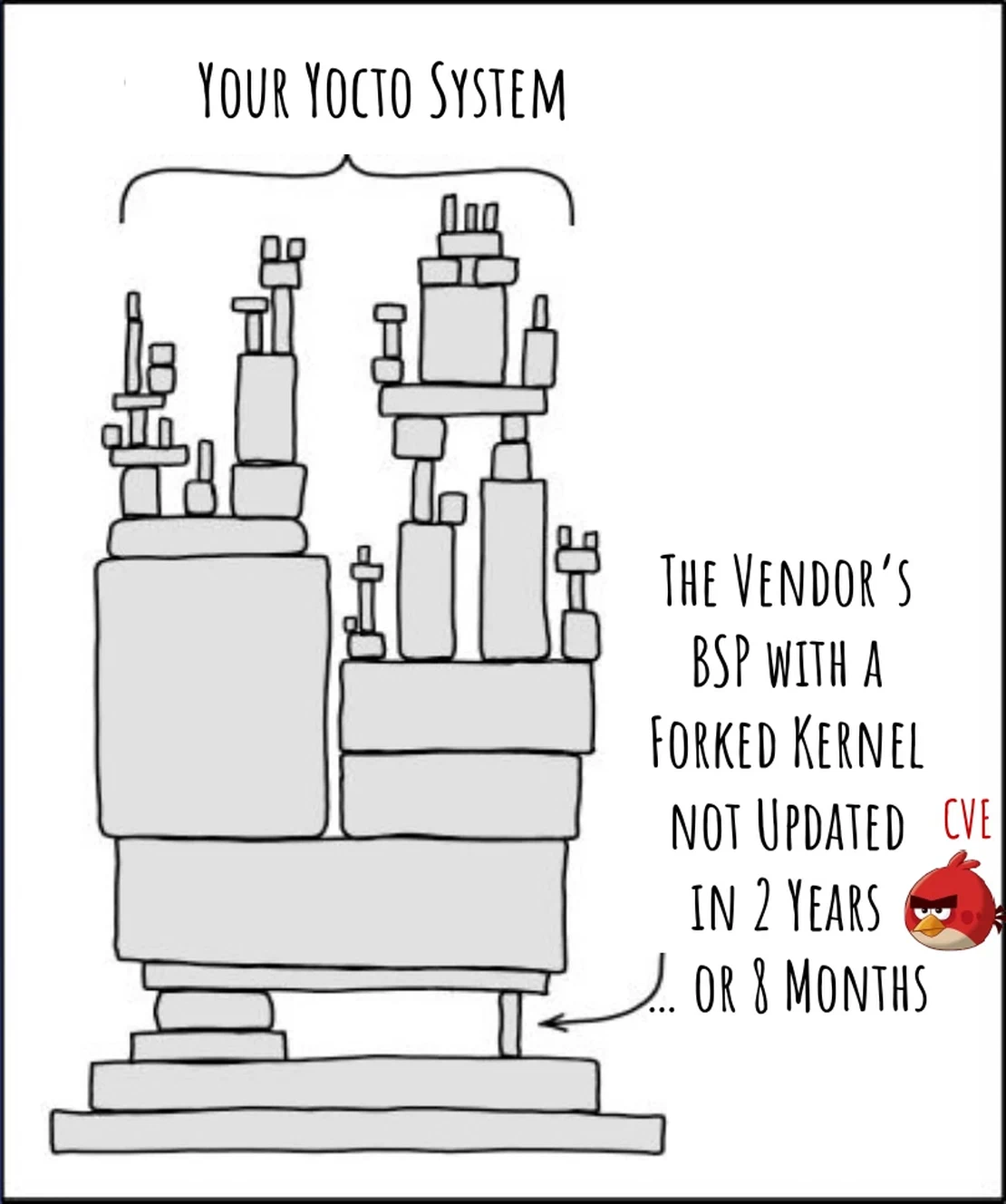
Your Vendor's BSP Is Probably Not Built For Product Longevity - Now What?
- Anna-Lena Marx
- December 4, 2025
- Embedded , Conferences
Vendor Board Support Packages (BSPs) are the standard for bringing new silicon to market, showcasing features, and promising an “easy” start. However, for those of us building products with long-term lifecycles, these BSPs often fail to meet quality requirements. They can be overly intrusive and typically don’t separate feature showcases from the well-maintained base needed for product development. This focus on rapid demonstration frequently results in BSPs which are difficult to maintain, lack transparency, and are built on non-LTS Yocto and kernel versions, making them unsuitable for products expected to last 5, 10, or even 20 years.
Read Post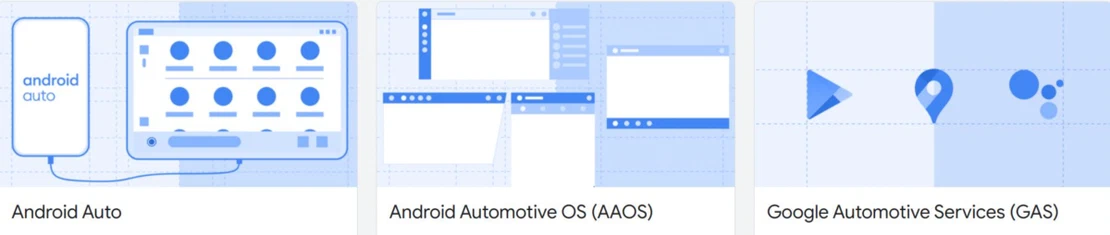
Android Automotive OS: A short introduction into Google's AAOS
- Anna-Lena Marx
- April 2, 2024
- Embedded , Conferences
Android, or the Android Open Source Project (AOSP), is primarily known from the smartphone market. What is less well known, however, is that the AOSP also provides a good basis for embedded systems and ensures a pleasant reading experience on eReaders, for example.
Google is now increasingly pushing into the automotive sector with Android Automotive. But what exactly is Android Automotive or the Android Automotive Operating System (AAOS)? How does it differ from Android or the AOSP? And what are the advantages over classic operating systems for infotainment?
Read Post