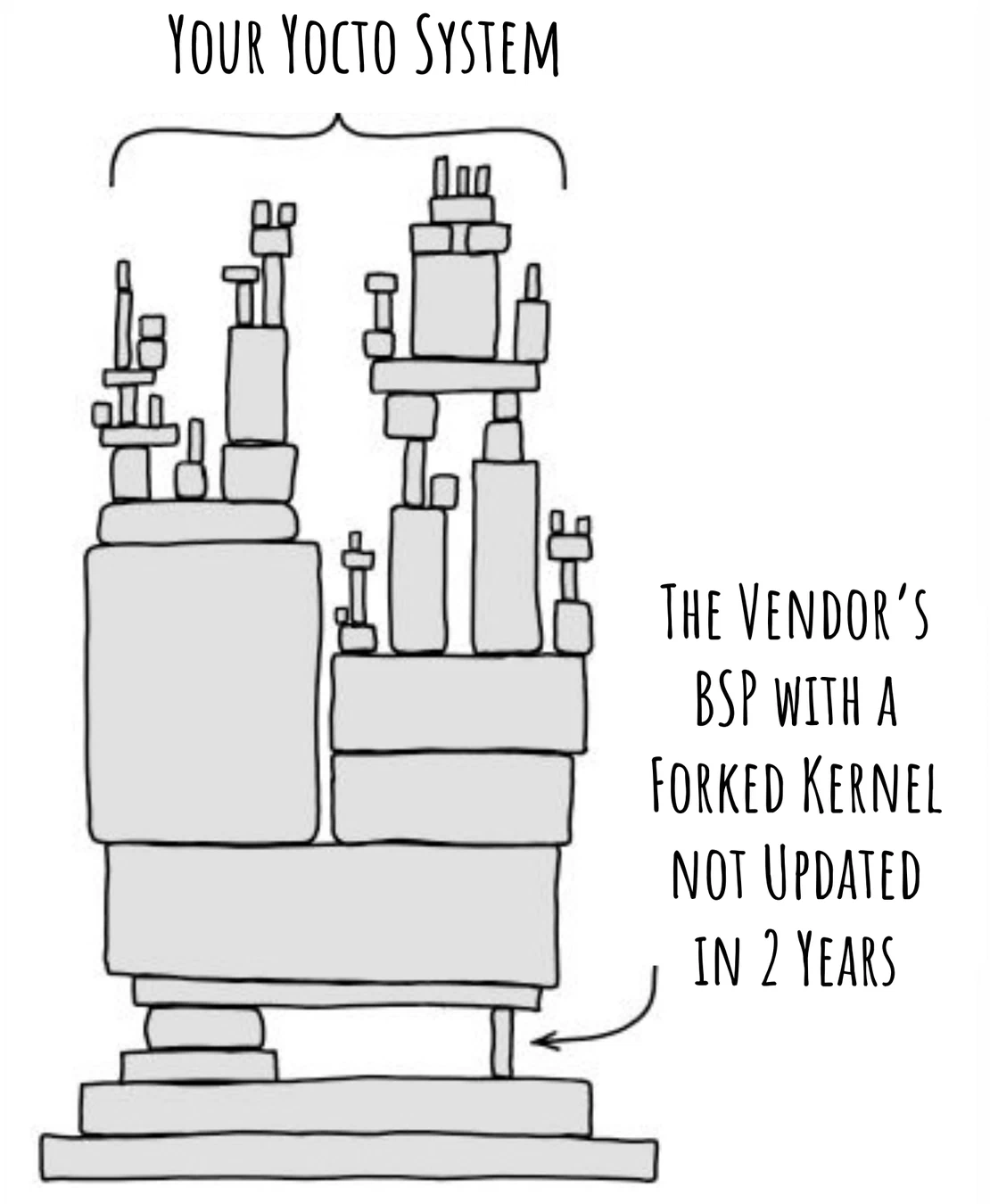
Yocto Vendor BSPs - The good, the bad, the ugly
- Anna-Lena Marx
- Embedded , Conferences
- November 6, 2025
Vendor Board Support Packages (BSPs) promise a quick start, but we all know the reality: a tangled mess of demo apps, weird custom tools, and an old, unmaintained kernel. This is a nightmare for products that need to live longer than a demo on the developer’s desk.
In this talk, we get our hands dirty. Forget the polished slides; we’re going to take a live, no-holds-barred look at some real-world vendor BSPs to see the common pain points firsthand. From there, we’ll discuss what we actually need from a BSP for a production device and explore the tipping point where setting up your own clean foundation becomes the smarter choice for building products that are meant to last.
Presented at
- inovex Meetup 2025, Karlsruhe, Germany
Related Posts
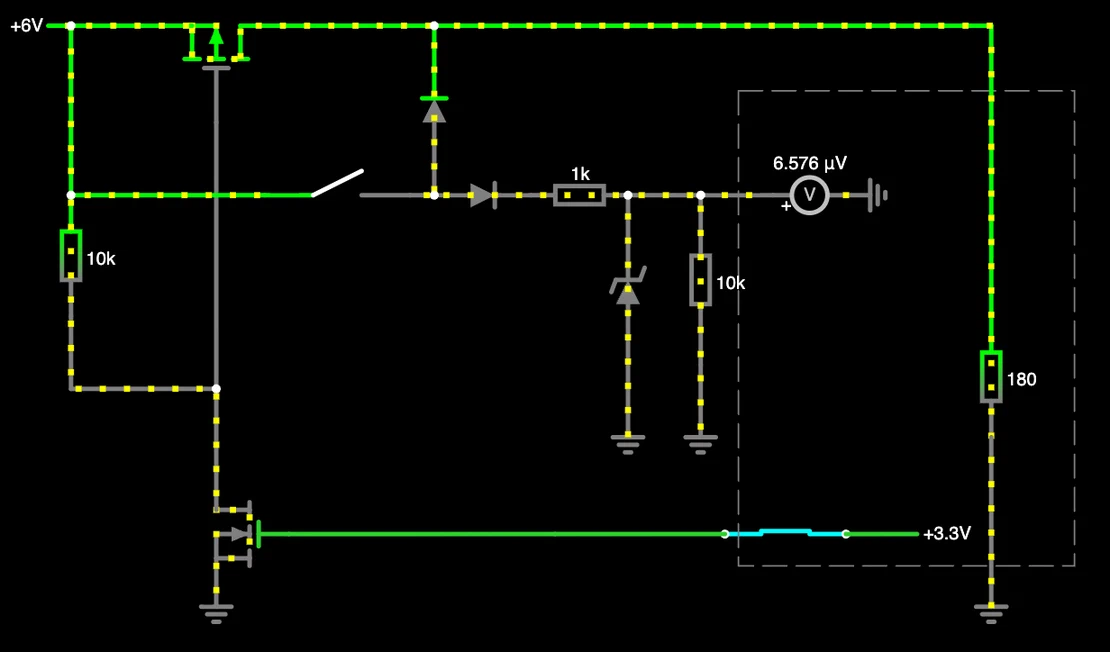
A Gentle Power Off for ZEReader: Replacing the Hard Switch with a Latching Power Circuit
- Anna-Lena Marx
- November 16, 2025
- Zereader , Electronics , Embedded
With the second revision, the way ZEReader is turned on and off got a massive redesign.
The hard on/off switch in the first revision was dead simple and worked great—with one big flaw from a user’s perspective. You could not recognize if the reader was on or off on the first sight. The old switch just closed or opened the loop with the power supply, and due to the E-Paper display just holding the state, you had no chance to tell.
Besides, there was no possibility at all to implement some kind of graceful shutdown mechanism, which would allow me to save all important state information and show a clear device off indicator.
This situation was totally fine for the very first prototype, but it started to get annoying very soon. A new approach was needed!
Building Trust - Use Cases and Implementation of TPM 2.0 in Embedded Linux Systems
- Anna-Lena Marx
- May 16, 2025
- Embedded , Conferences
Artwork by: Sparkelle (Yan) — Licensed under Creative Commons BY-SA 4.0
As embedded systems become increasingly interconnected, the demand for robust platform security and integrity has surged. Trusted Platform Modules (TPM), currently in version 2.0, are becoming increasingly beneficial for enhancing security in embedded systems. TPMs provide hardware-backed mechanisms for critical functions such as random number generation, cryptographic key generation, key binding and data sealing.
This presentation will explore the capabilities of TPM 2.0, focusing on several practical use cases, including:
Read Post
Building Embedded Systems with AOSP
- Anna-Lena Marx
- June 30, 2023
- Embedded , Conferences
In our community, building embedded systems based on Linux, e.g. with Yocto or buildroot, is standard and well known. Considering Android, respectively the AOSP as a base system feels strange at the beginning as it is a huge ecosystem that implies high system requirements. Of course, embedded Android is not a solution for each issue. Nevertheless, the AOSP provides a sophisticated base platform which is packed with a
- modern UI stack
- robust media and camera implementation
- modern AI runtime
- well known abstraction between system and app development
- energy optimization
and lots of other helpful infrastructure.
This makes AOSP an interesting approach for building more complex embedded systems.