
How a modern Yocto setup could look like
- Anna-Lena Marx
- Embedded , Conferences
- November 20, 2022
In 2015, we built a sophisticated meeting room information system based on Android Things as a student project. As Android Things was deprecated in 2021, we started to use our Yocto Project experience to develop a maintainable, future proof embedded system.
When setting up a new project from scratch, we focused on proper solutions for
- a maintainable, well supported and patchable build environment for the embedded systems
- version control, reproducible builds and continuous integration
- license management
- a secure and stable update mechanism on image base and
- managing releases The talk aims to show how we build a system that matches our requirements using the Yocto Project, KAS, Gitlab CI, and Mender.io. Besides, we will have a short outlook to the application built in Flutter.
Presented at
- Yocto Project Summit 2022.11, virtual, 2022
- buildingIoT, Munich, 2023
Download original slides (Yocto Project Summit) Download updated slides (buildingIoT)
Related Posts

Raspberry Pi für die professionelle Produktentwicklung - Eine gute Idee?
- Anna-Lena Marx
- May 10, 2022
- Embedded , Conferences
Maschinen und Geräte durch Vernetzung und Software aufzuwerten ist ein Kerngedanke des IoT. So werden die resultierenden Projekte häufig aus der Fachdomäne mit dem Wunsch nach schnellen und einfachen Erfolgen gestartet. Die Idee liegt dann nahe den beliebten Raspberry Pi als Basis zu nutzen. Das Gerät ist ja bekannt, fast alles wurde schon einmal von irgendwem gemacht und ins Netz gestellt. Klingt fast zu schön, um wahr zu sein - ist es auch aus professioneller Sicht. Die Gründe hierfür und welche Faktoren bei der Entscheidung für eine Hard- und Software-Plattform als Basis für ein IoT Produkt berücksichtigen werden sollten, sind Inhalt des Vortrags.
Read Post
Building Trust - Use Cases and Implementation of TPM 2.0 in Embedded Linux Systems
- Anna-Lena Marx
- May 16, 2025
- Embedded , Conferences
Artwork by: Sparkelle (Yan) — Licensed under Creative Commons BY-SA 4.0
As embedded systems become increasingly interconnected, the demand for robust platform security and integrity has surged. Trusted Platform Modules (TPM), currently in version 2.0, are becoming increasingly beneficial for enhancing security in embedded systems. TPMs provide hardware-backed mechanisms for critical functions such as random number generation, cryptographic key generation, key binding and data sealing.
This presentation will explore the capabilities of TPM 2.0, focusing on several practical use cases, including:
Read Post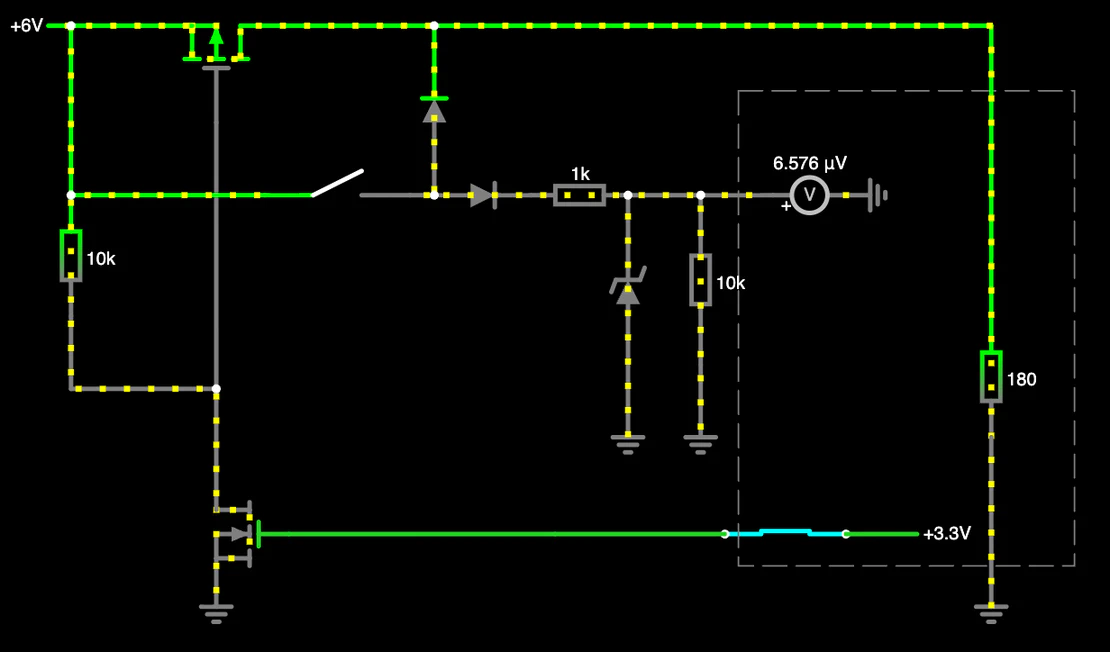
A Gentle Power Off for ZEReader: Replacing the Hard Switch with a Latching Power Circuit
- Anna-Lena Marx
- November 16, 2025
- Zereader , Electronics , Embedded
With the second revision, the way ZEReader is turned on and off got a massive redesign.
The hard on/off switch in the first revision was dead simple and worked great—with one big flaw from a user’s perspective. You could not recognize if the reader was on or off on the first sight. The old switch just closed or opened the loop with the power supply, and due to the E-Paper display just holding the state, you had no chance to tell.
Besides, there was no possibility at all to implement some kind of graceful shutdown mechanism, which would allow me to save all important state information and show a clear device off indicator.
This situation was totally fine for the very first prototype, but it started to get annoying very soon. A new approach was needed!