Embedded World 2024
- Anna-Lena Marx
- Embedded
- April 24, 2024
Table of Contents
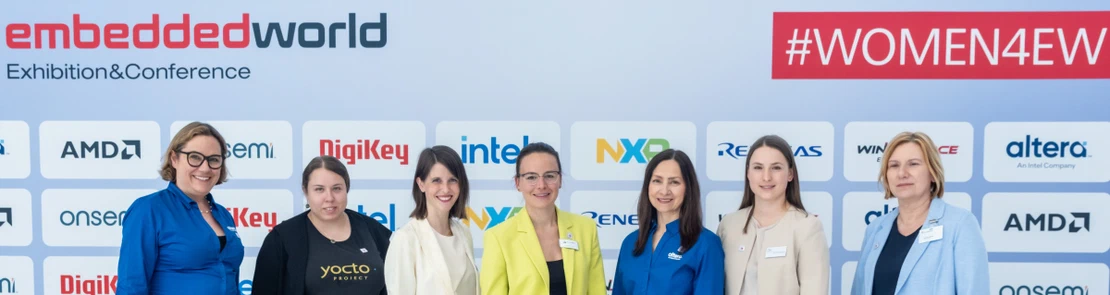
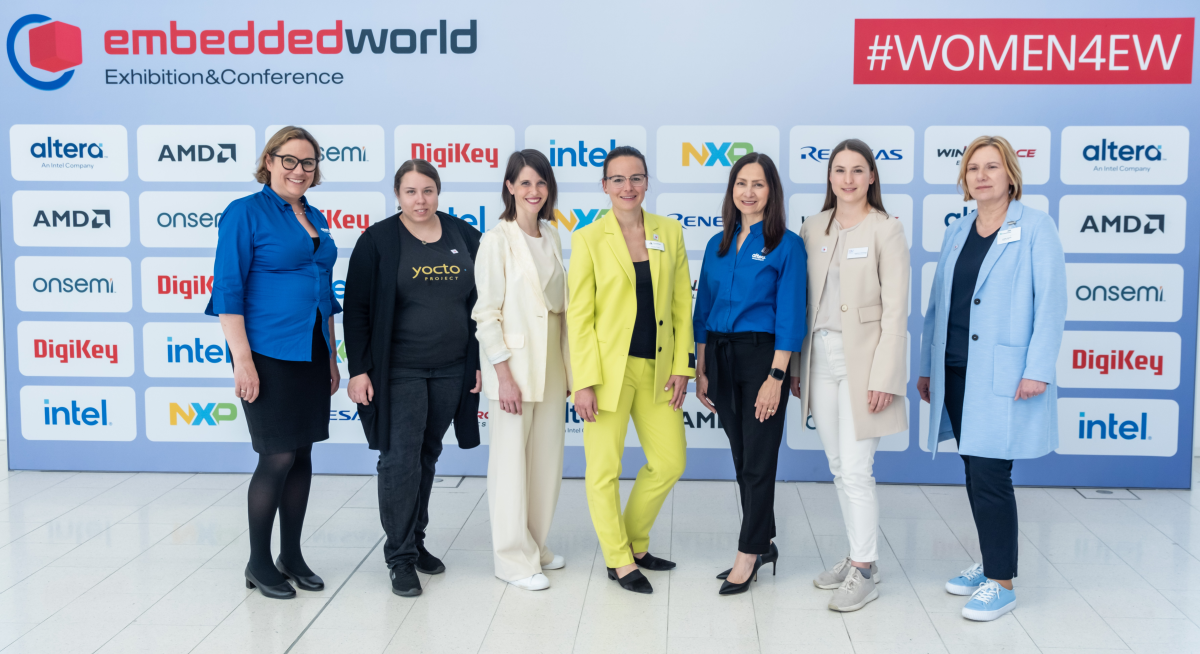
While I’m a regular visitor of the Embedded World Exhibition, this year was different. I had not only a more business-focused visit with lots of meetings with old and new partners and customers, but I also had the chance to serve rather spontaneously as a speaker, or better “Table Captain,” at the second edition of Embedded World’s women networking event #women4ew. Thus, I want to recap both parts separately and make a reference to what changed in contrast to my experiences outlined in the recently published post on International Women’s Day.
women4ew
While I usually speak as a technical expert at conferences, taking on the role of a role model and Table Captain was a new challenge for me. I stepped in at short notice for a speaker who was unable to attend. So, I only had one day to prepare a topic and abstract that I felt comfortable with and that would make an impact for the women in the discussion. Here is the result:
Making strengths and skills visible, overcoming prejudices: Self-confidence in technical professions
As a female engineer, it is not always easy to assert yourself in such a deeply technical environment as embedded systems and electronics. Instead of a leap of faith in your own competence, you often experience skepticism and reservations in contrast to male colleagues. How do you deal professionally and competently if you are initially considered to be “the insignificant appendage of marketing” in meetings with customers, business partners or colleagues? How do you manage to maintain a positive attitude towards new interlocutors over the years? And what kind of support do we want from our colleagues and how do we sensitize them to this? We want to share experiences and discuss possible strategies around the table!
- How do you approach (new) customers, colleagues and business partners competently and confidently and what strategies do you use to engage in discussions on an equal footing?
- How do you deal positively and constructively with mutual expectations, what experiences have you had (positive/negative)?
- How do you present your skills to the outside world and take leadership/responsibility for topics that you enjoy?
As written, it was a new experience for me to speak in such a context, share my experiences and strategies, and moderate a group. I believe such a format thrives on discussion and exchange. While my tips may not resonate with everyone, I hope that through these discussions, all participants could find something meaningful for themselves, even if it’s just the realization that they are not alone in their experiences.
While I thoroughly enjoyed the event and am delighted to have been a part of it, I have one wish. Looking to the future, I hope to see more women directly involved in technical roles within the embedded systems industry, serving as speakers and role models. While career advancement and the current trending topic of AI are certainly valid, I do not intend to invalidate my fellow Table Captains or replace their topics entirely - in fact, I would have liked to hear their pitches myself! However, I believe that having more technical role models could have an even more positive impact, particularly for young women in the industry.
Furthermore, I am optimistic that we can eventually overcome the current male dominance and the associated challenges in the industry. I envision a future where women feel more confident in networking, approaching it with the same ease as men, potentially making events like this unnecessary. Until then, I am grateful for events like #women4ew and eagerly anticipate many more editions.
The Exhibition
I don’t want to delve deeply into the trade fair itself, but rather share the personal changes I made during this year’s visit and the impact they had on my experience, especially in comparison to the experiences I shared for International Women’s Day.
The first significant change was that my approach to the trade fair this year was marked by a clearer business focus. Accompanied by colleagues, our purpose was not merely to observe the latest trends and developments but to engage with both new and established business partners and clients. With scheduled appointments and clearly communicated objectives in front of the exhibition, the atmosphere and expectations were entirely different compared to the negative encounters I had previously described. Establishing contact in advance and being able to familiarize ourselves with our conversation partners made it much easier to engage on an equal footing and conduct ourselves in a professional and purposeful manner.
Furthermore, on the second day, I ventured alone without any appointments, but I was unmistakably identifiable as an embedded enthusiast through my Yocto t-shirt. This combination proved to be quite effective for me. However, the act of being alone is indeed a factor not to be underestimated, as situations where the conversation eventually only revolved around my companion could not arise. In this setting, I also had many enriching conversations at the booths and gathered several inspirations.
In conclusion, I can confidently say that my visit to the embedded world this year was a resounding success, and I will particularly cherish the role of being a table captain as well as the engaging conversations at the networking event.
Related Posts
USB Updates - Challenges, Approaches and Practical Tips
- Anna-Lena Marx
- February 24, 2024
- Embedded , Conferences
Over-the-air updates have established themselves as the standard for networked devices, but the effort involved in operating the server side is not always commensurate with the benefits. In such cases, the supposedly simple and quick solution of implementing updates via USB is often chosen. But is it really always that uncomplicated? What considerations are necessary to implement USB updates effectively?
This presentation provides an insight into the challenges of USB updates and presents solutions and practical tips for successful implementation. Find out which aspects need to be considered in order to optimize USB updates and ensure a smooth process
Read Post
Raspberry Pi für die professionelle Produktentwicklung - Eine gute Idee?
- Anna-Lena Marx
- May 10, 2022
- Embedded , Conferences
Maschinen und Geräte durch Vernetzung und Software aufzuwerten ist ein Kerngedanke des IoT. So werden die resultierenden Projekte häufig aus der Fachdomäne mit dem Wunsch nach schnellen und einfachen Erfolgen gestartet. Die Idee liegt dann nahe den beliebten Raspberry Pi als Basis zu nutzen. Das Gerät ist ja bekannt, fast alles wurde schon einmal von irgendwem gemacht und ins Netz gestellt. Klingt fast zu schön, um wahr zu sein - ist es auch aus professioneller Sicht. Die Gründe hierfür und welche Faktoren bei der Entscheidung für eine Hard- und Software-Plattform als Basis für ein IoT Produkt berücksichtigen werden sollten, sind Inhalt des Vortrags.
Read Post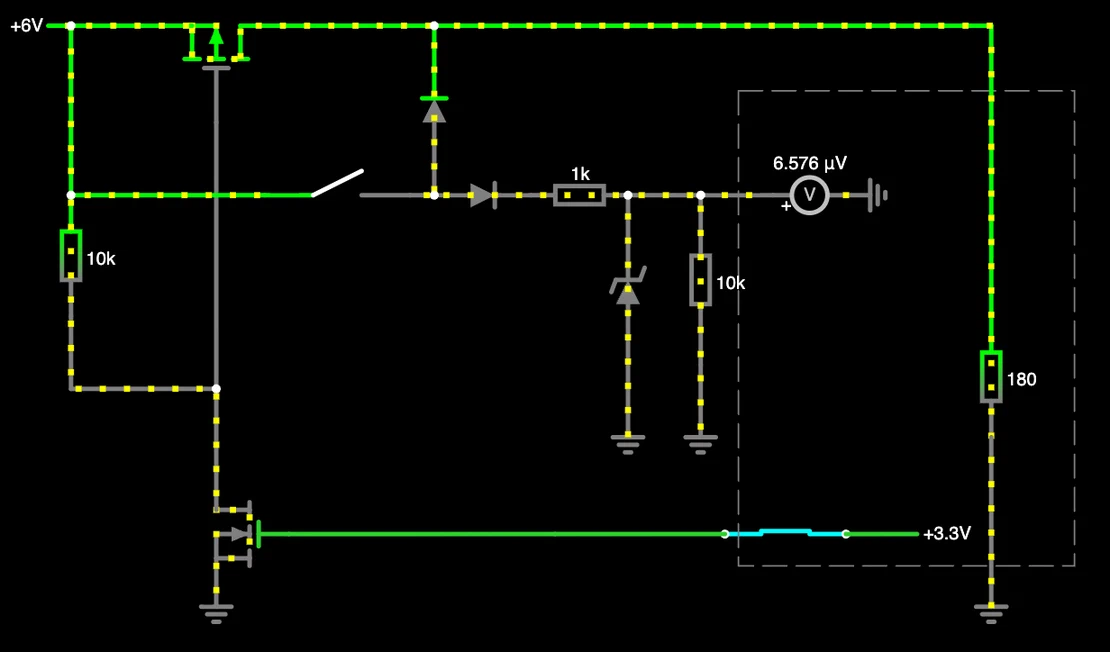
A Gentle Power Off for ZEReader: Replacing the Hard Switch with a Latching Power Circuit
- Anna-Lena Marx
- November 16, 2025
- Zereader , Electronics , Embedded
With the second revision, the way ZEReader is turned on and off got a massive redesign.
The hard on/off switch in the first revision was dead simple and worked great—with one big flaw from a user’s perspective. You could not recognize if the reader was on or off on the first sight. The old switch just closed or opened the loop with the power supply, and due to the E-Paper display just holding the state, you had no chance to tell.
Besides, there was no possibility at all to implement some kind of graceful shutdown mechanism, which would allow me to save all important state information and show a clear device off indicator.
This situation was totally fine for the very first prototype, but it started to get annoying very soon. A new approach was needed!