Building Trust - Use Cases and Implementation of TPM 2.0 in Embedded Linux Systems
- Anna-Lena Marx
- Embedded , Conferences
- May 16, 2025
Artwork by: Sparkelle (Yan) — Licensed under Creative Commons BY-SA 4.0
As embedded systems become increasingly interconnected, the demand for robust platform security and integrity has surged. Trusted Platform Modules (TPM), currently in version 2.0, are becoming increasingly beneficial for enhancing security in embedded systems. TPMs provide hardware-backed mechanisms for critical functions such as random number generation, cryptographic key generation, key binding and data sealing.
This presentation will explore the capabilities of TPM 2.0, focusing on several practical use cases, including:
- Providing a unique and persistent serial number for device identification.
- Supporting secure boot mechanisms to establish a reliable chain of trust.
- Encrypting user data without the need for user passwords.
- Managing application credentials securely.
Additionally, we will discuss the integration of TPM 2.0 within Yocto-based embedded systems and present strategies for automated provisioning, highlighting how these elements work together to enhance overall system security.
Presented at
- Embedded Recipes 2025, Nice, France
Related Posts
Your Vendor's BSP Is Probably Not Built For Product Longevity - Now What?
- Anna-Lena Marx
- December 4, 2025
- Embedded , Conferences
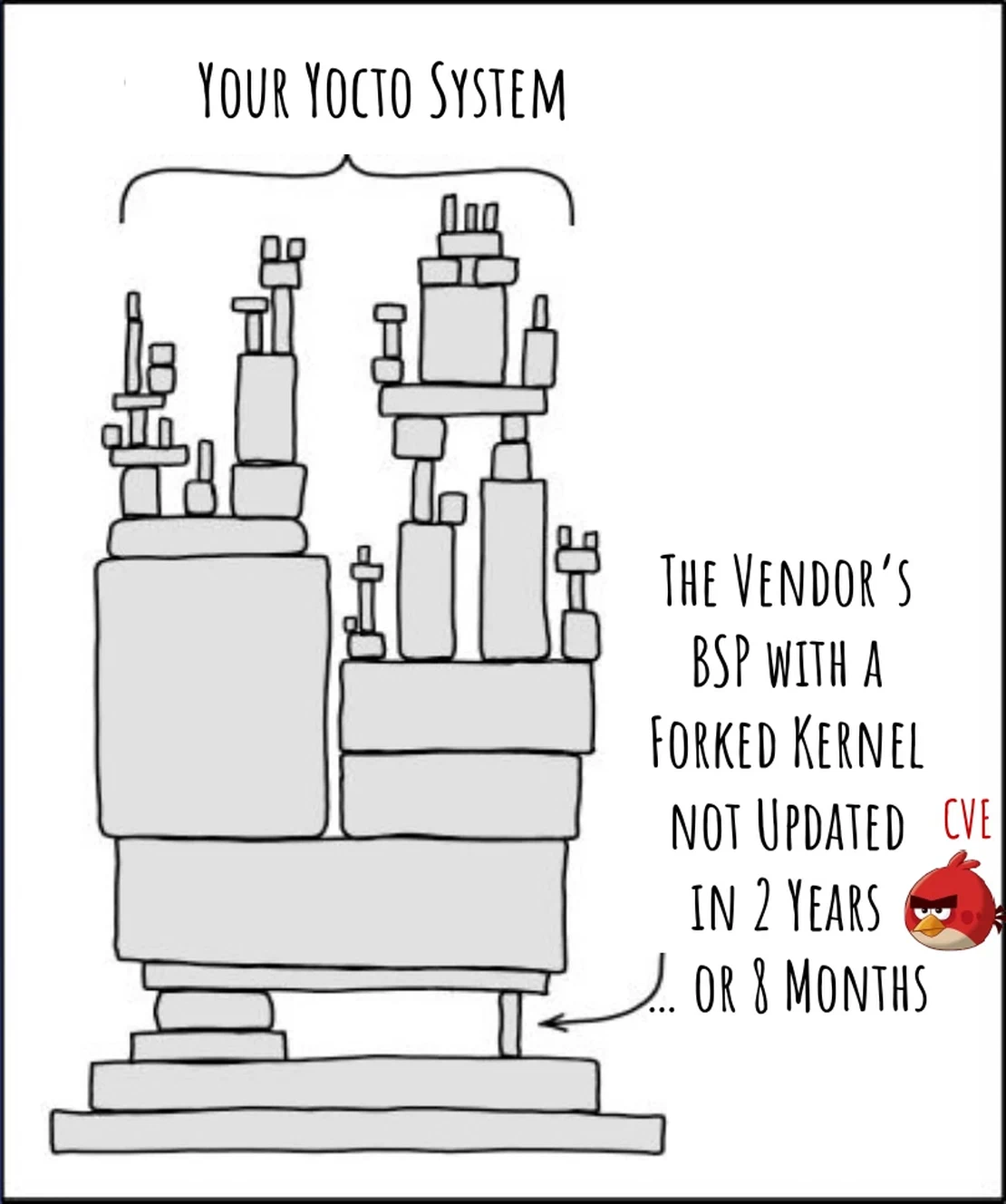
Vendor Board Support Packages (BSPs) are the standard for bringing new silicon to market, showcasing features, and promising an “easy” start. However, for those of us building products with long-term lifecycles, these BSPs often fail to meet quality requirements. They can be overly intrusive and typically don’t separate feature showcases from the well-maintained base needed for product development. This focus on rapid demonstration frequently results in BSPs which are difficult to maintain, lack transparency, and are built on non-LTS Yocto and kernel versions, making them unsuitable for products expected to last 5, 10, or even 20 years.
Read Post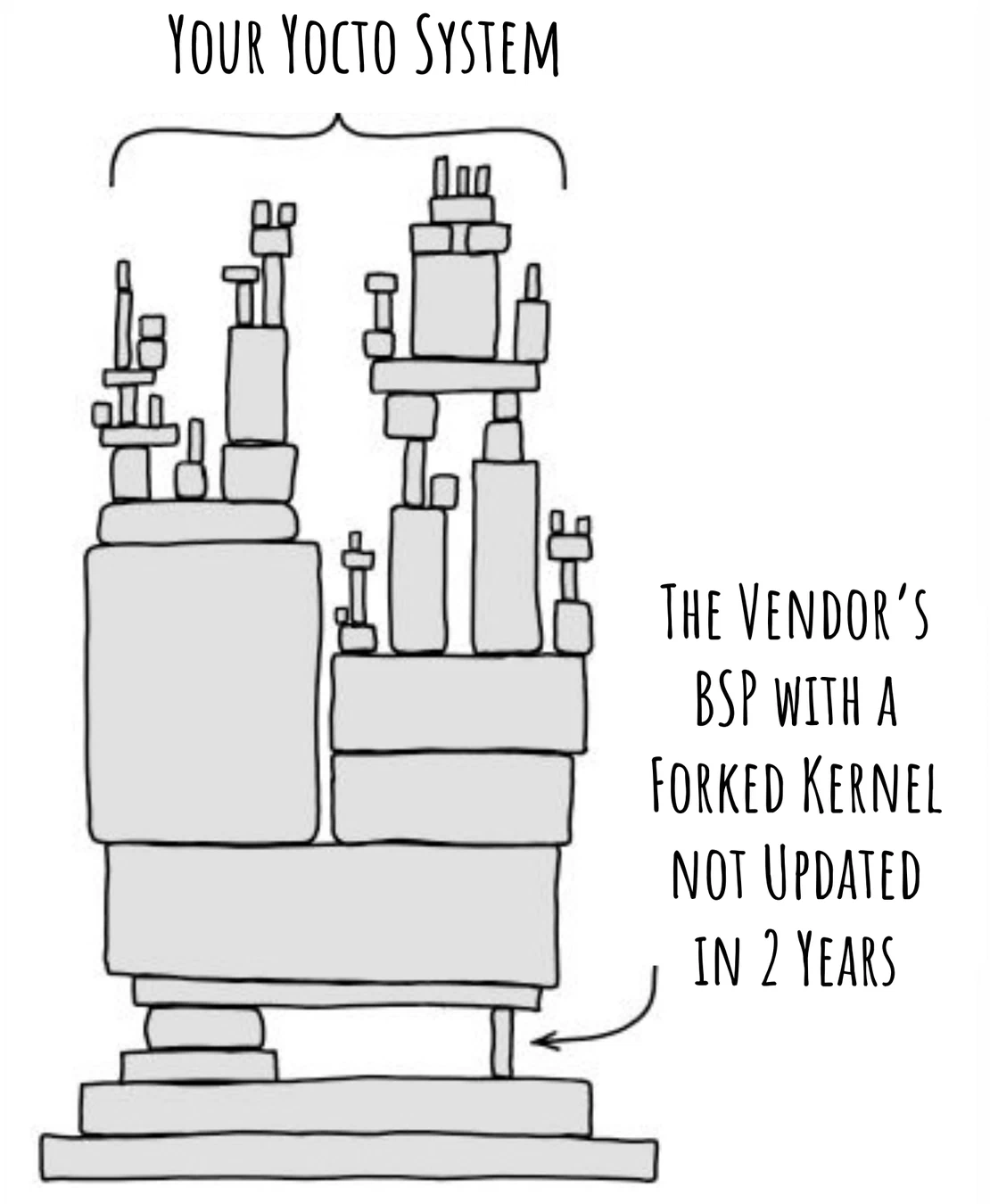
Yocto Vendor BSPs - The good, the bad, the ugly
- Anna-Lena Marx
- November 6, 2025
- Embedded , Conferences
Vendor Board Support Packages (BSPs) promise a quick start, but we all know the reality: a tangled mess of demo apps, weird custom tools, and an old, unmaintained kernel. This is a nightmare for products that need to live longer than a demo on the developer’s desk.
In this talk, we get our hands dirty. Forget the polished slides; we’re going to take a live, no-holds-barred look at some real-world vendor BSPs to see the common pain points firsthand. From there, we’ll discuss what we actually need from a BSP for a production device and explore the tipping point where setting up your own clean foundation becomes the smarter choice for building products that are meant to last.
Read Post
Building a Yocto Pipeline with KAS, GitHub Actions and AWS
- Anna-Lena Marx
- November 29, 2023
- Embedded , Conferences
Using KAS makes handling Yocto Projects easy. By shipping its own container with all needed dependencies, building sophisticated CI pipelines becomes pretty easy - in theory, or when using Gitlab.
But using GitHub as a code hosting platform with self-managed Action runners on AWS comes with a set of unexpected challenges.
Anna-Lena will talk about her quest through GitHub Actions, the Cloud and how to tame them.
The talk aims to point the audience to the obstacles when building CI pipelines for the Yocto Project with KAS, GitHub Actions, and custom action runners on AWS and strategies to handle them.